Why Spain Is Such a Wonderful Place for Families

Helen Barklam
Last update: 2026-08-19
Helen Barklam
Last update: 2026-08-19
Spain is often described in terms of sunshine, beaches and a more relaxed way of life. Those things certainly form part of its appeal, but for families, the benefits can go much deeper.
What stands out most is not simply the climate or the opportunity to spend more time outdoors. It is the place families occupy within everyday Spanish life. Children are included, family time is protected and communities still feel genuinely intergenerational.
Of course, Spain is an enormously varied country and family life will differ depending on where you live. A busy city, an international coastal resort and a traditional Andalucian town will each offer something different. Nevertheless, there are certain qualities that help make Spain particularly appealing to families considering a move abroad.
One of the loveliest things about living in Spain is how naturally children are included in social life.
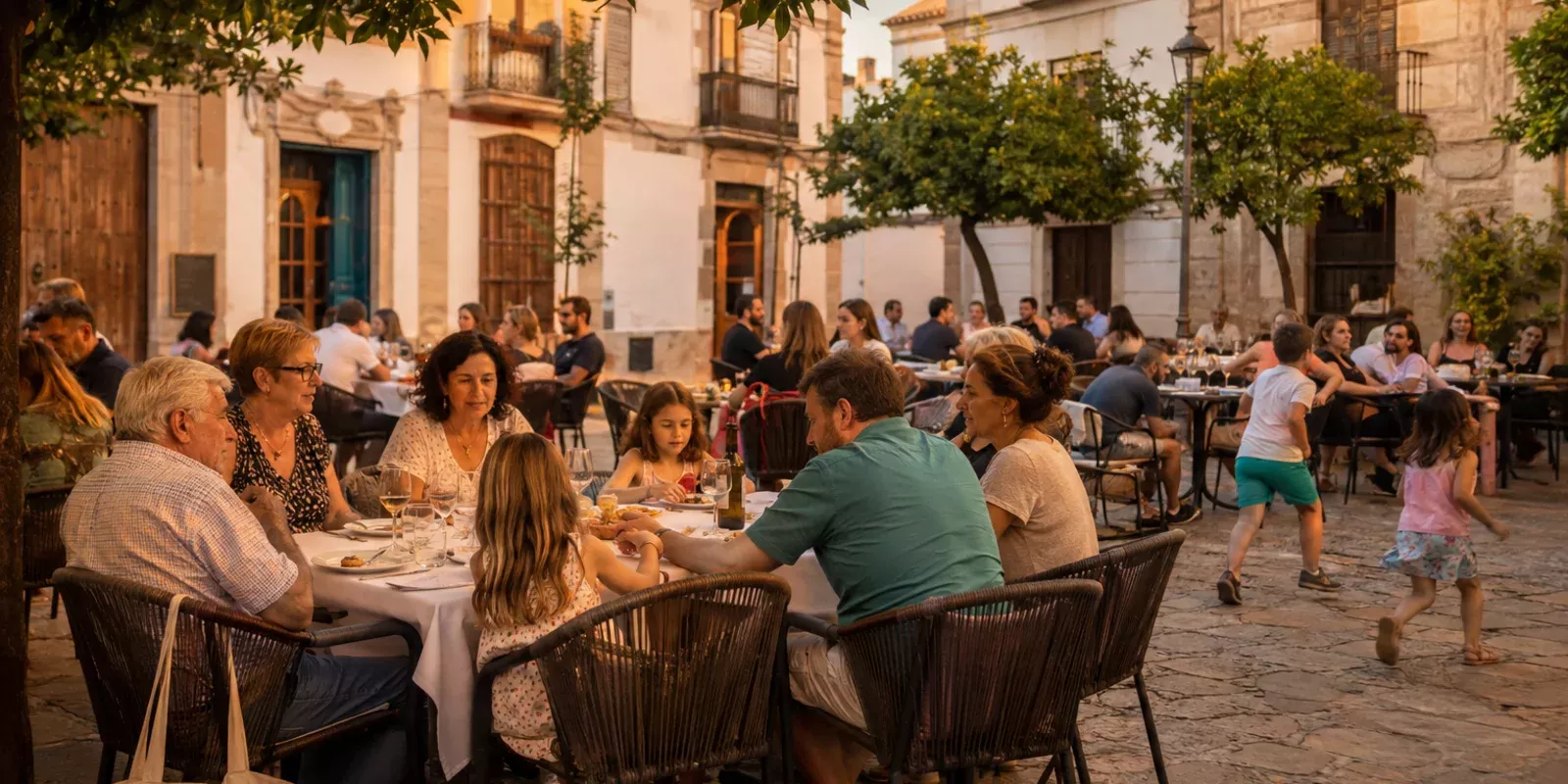
Restaurants, cafés, plazas and local events are rarely viewed as spaces reserved primarily for adults. Children are welcomed and families tend to spend time together across the generations.
It is perfectly normal to see grandparents, parents and children sharing a long lunch or gathering in a local plaza during the evening. Children are not expected to disappear from view simply because it is later in the day.
For families arriving from countries where social life can sometimes feel divided into adult and child-friendly spaces, this can be a refreshing change.
The Spanish climate makes it easier to build an outdoor life.
Children can spend more of the year playing in parks, on beaches and in public squares. Meals can be eaten outside and weekends can involve anything from a walk along the promenade to an afternoon in the mountains.
This does not mean every day is sunny or that the whole of Spain shares the same climate. Northern Spain is very different from Andalucía, while inland areas can experience extremely hot summers and cold winters.
However, in many parts of the country, the weather makes spontaneous outdoor activity easier. You do not always need to organise an elaborate day out. Sometimes it is simply a matter of walking to the beach, meeting friends in a plaza or letting the children play while the adults sit nearby.
Family remains enormously important in Spanish culture.
Extended families frequently live close to one another and grandparents often play an active part in daily life. Sundays, celebrations and local festivals bring different generations together rather than separating them into age groups.
For an international family without relatives nearby, moving abroad can still feel daunting. However, the visibility of family life can make it easier to feel part of the community, particularly once children begin attending school or joining local clubs and activities.
Children often become the connection through which parents meet other families, practise their Spanish and gradually build a local support network.
In many Spanish towns and neighbourhoods, everyday life still happens in shared spaces.
People meet in local cafés, shop in neighbourhood businesses and gather for fiestas, religious celebrations and seasonal events. These traditions create a sense of belonging that can be difficult to appreciate during a short holiday.
Spain is not one single culture and every region has its own customs, languages and rhythms. Andalucía alone can feel different from one town to the next.
That local identity is part of what makes living here so interesting. Families have the opportunity not merely to live in Spain, but to become part of a particular community and learn its traditions.
Spain is often described as having a slower pace, although anyone who has dealt with school runs, work and family commitments will know that life does not suddenly become effortless when you move abroad.
The difference is often in how time is used.
Meals are treated as social occasions. Evenings are lived outside the home and weekends often revolve around family, friends and shared experiences. There can be more emphasis on being together than on constantly filling the diary.
For families hoping to create more balance, that rhythm can be enormously appealing. It may offer the chance to spend less time rushing between organised activities and more time enjoying ordinary life together.
Spain offers public, concertado, private and international schooling, but the availability and suitability of each option depend greatly on the location.
International schools are more concentrated in major cities and areas with established overseas communities. In more traditionally Spanish towns, families may have fewer English-language options but greater opportunities for children to become immersed in Spanish.
Young children often adapt remarkably quickly and learning another language can become one of the greatest long-term benefits of the move. However, choosing a school deserves careful research.
Parents need to consider language, curriculum, travel time, admission requirements and how well the school will support a child during the transition. The right school should be part of the location decision from the beginning, not something considered after finding a property.
Spain can offer a fantastic family lifestyle, but location matters.
Some families want an international community, established support networks and access to English-speaking schools. Others want a more traditionally Spanish environment and are comfortable conducting more of everyday life in Spanish.
A coastal town may offer beaches and outdoor living, while a city can provide better transport, cultural opportunities and a wider choice of schools. A quieter inland location may offer more space, but it could also mean travelling further for services and activities.
There is no single place in Spain that will suit every family.
Before buying, it is worth spending time in the areas you are considering outside the main holiday season. Try the school route, visit local parks, explore the shops and see what the town feels like on an ordinary weekday.
The best family home is not necessarily the property with the largest garden or the closest swimming pool. It is the one situated somewhere that supports the way your family genuinely wants to live.
Spain’s sunshine may attract families initially, but it is often the culture, community and everyday quality of life that persuade them to stay.
Thinking about moving your family to Spain? Let’s explore the areas that could offer the right home, schools and lifestyle for you.
Helen Barklam knows both property and people. With more than 25 years in marketing and five years in luxury real estate, she brings the kind of insight that goes beyond listings - understanding what clients are truly looking for and finding it.
Over five years she has worked across the Costa del Sol, Almería and the Costa de la Luz, building rare breadth across Spain's most distinctive markets. Affiliated with eXp Global Spain, she works with clients worldwide - selling and finding exceptional properties.
.
Why Spain Still Feels Like Home
Living in Spain is about far more than sunshine. It is breakfast on the terrace, evening walks by the sea, local markets and a stronger sense of community. For many buyers, the real goal is not a bigger house, but a better quality of life.
What Surprised Me Most About Living in Spain
Living in Spain is about far more than sunshine and beaches. From late-night dinners and Sunday traditions to full-scale family beach days, seasonal rules and remarkably different neighbouring towns, these are the everyday surprises that have made Spanish life so fascinating.
A Cape Verde Property Investment with Three Years of Rental Returns Paid in Advance
Discover a limited collection of 50 apartments within a luxury Cape Verde resort, priced from €130,000. With professional rental management and a guaranteed 6% annual rental return for three years, paid in advance, they offer a more hands-off route into overseas property investment.